Super Snail
- 4.5
- Rating
- 1.00M
- Installs
- Free
- Price

 Analysis by App-foxy
I did not expect a game about a snail to hold my attention for long, yet Super Snail quickly showed me that its strange premise is only the beginning. This free adventure game from Qcplay Limited mixes collecting, gradual growth, comedy, and a deliberately bizarre setting into something that feels closer to an interactive comic than a conventional quest-driven adventure. It is available for players on Android devices running version 6.0 or later, and its Teen content rating is a useful warning that the humor and presentation are not aimed at very young children.
My first impression was less about immediate action and more about curiosity. The game wants me to look around, inspect odd details, collect things, and keep improving a central character over time. That slower opening can feel unusual if I arrive expecting a traditional adventure with constant movement, combat, or a clear map objective. Instead, the game builds its appeal through small discoveries and an intentionally eccentric tone.
That approach has clearly found an audience. The game has passed one million installs, carries an average rating of 4.5 from around 46 thousand ratings, and has accumulated roughly 5.4 thousand written reviews. Those numbers do not guarantee that every player will enjoy its unusual pacing, but they do reflect how effectively its distinctive personality connects with many people.
You May Also Like

 Blood Strike: 2.5 Anniversary
Blood Strike’s Loadouts Turn Every Drop Into a Tactical Gamble
A close look at Blood Strike’s custom loadouts: how fast access to signature weapons reshapes its battle royale rhythm, rewards preparation, and narrows the gap between fights.

 Pandora - Music & Podcasts
Pandora’s Music Is Easy to Start, but Harder to Recover
Pandora’s strength is its low-effort path from a seed to a station. Its weak spot is how much confidence it asks you to place in connection, setup, and quiet recovery.

 8 Ball Pool
 Is Built on Rivalries, Rematches, and Routine
A close look at the rivalries, rematches, shared routines, and unanswered safety questions that turn a quick pool match into a persistent mobile community.

 Samsung Music
’s Quiet Strength Is Playing What You Already Own
Its reach comes less from spectacle than from dependable access to a personal library. That simplicity is both the app’s strongest retention engine and its ceiling.

 AccuWeather: Weather Radar
AccuWeather Review: A Quick, Clear Forecast for Everyday Decisions
For everyday plans, the best forecast is the one you can understand quickly. AccuWeather makes rain timing, radar, and local conditions easy to act on, with a few trade-offs.

 Hill Climb Racing
Why Hill Climb Racing Still Turns Crashes Into One More Run
A tiny car, a bumpy hill and one more upgrade: Hill Climb Racing keeps resurfacing because its simple chaos makes every near-miss feel personal.
More From Our News Desk
View All News


A bizarre world that communicates through art and detail
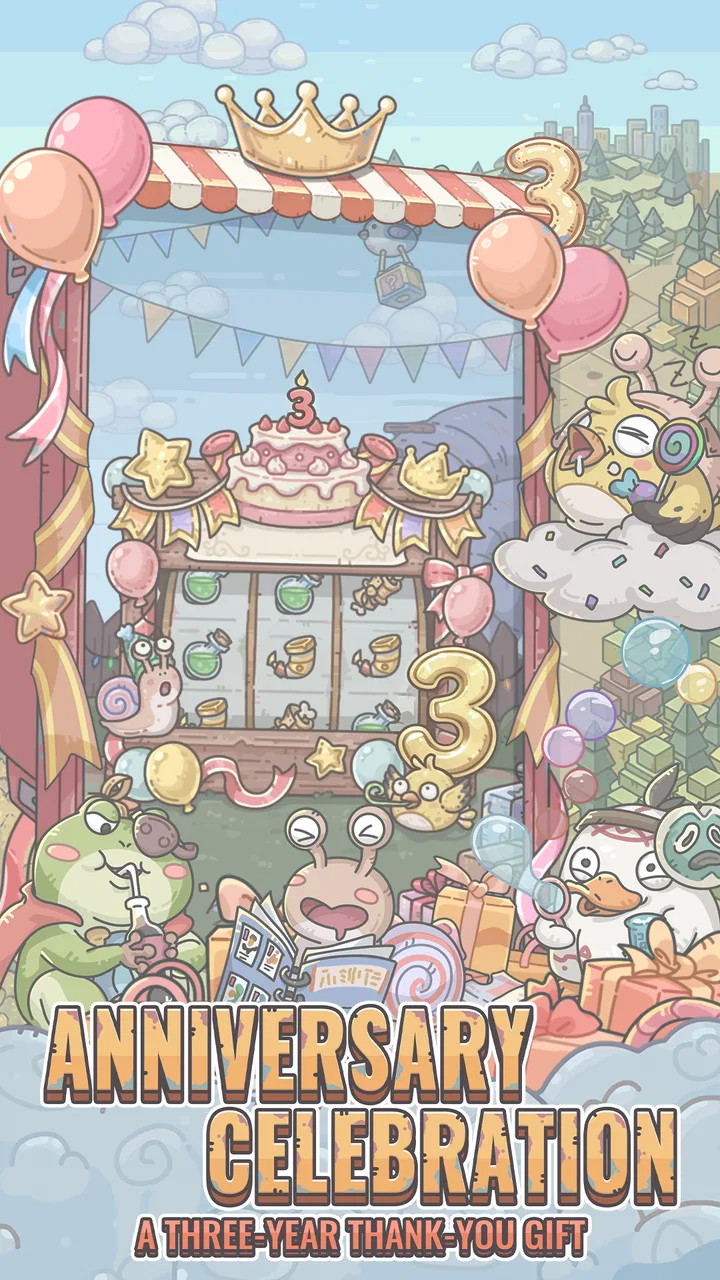
The strongest part of my time with the game was its visual language. Super Snail does not try to make its world feel realistic or traditionally heroic. It leans into exaggerated characters, strange situations, visual jokes, and a scrapbook-like sense of discovery. The result is a setting that feels deliberately assembled from unexpected ideas rather than designed to be taken seriously.
That artistic choice matters because the basic premise could otherwise become repetitive. A snail collecting and growing might sound like a narrow joke, but the surrounding presentation keeps expanding the idea. The world feels as though it is constantly asking me to accept one more absurd detail, then rewarding that acceptance with another collectible, scene, or piece of context.
I especially liked how the art direction supports exploration without needing every moment to be dramatic. A screen can be interesting because of its composition, a character’s expression, or a strange object placed in the background. This gives the game a browsing quality: I often played because I wanted to see what the next screen would reveal, not because I was chasing a conventional adventure climax.
There is also a practical benefit to this style. The game does not depend entirely on realistic landscapes or cinematic spectacle to create identity. Its personality comes from contrast: cute shapes beside unsettling jokes, familiar adventure ideas beside ridiculous characters, and serious-looking presentation undercut by playful details. That contrast makes the setting recognizable even when the underlying activity is simple.
Still, the same visual confidence may divide players. If I prefer clean interfaces, restrained humor, or a focused fantasy world, the constant weirdness can feel noisy. Some scenes appear designed to surprise before they explain themselves, so I had to accept that not every joke or image would immediately work for me. This is not a neutral art style; it is the main reason to try the game and one of the main reasons someone else might stop playing.
Why the setting works better when I slow down
The game rewards attention more than rushing. I found it useful to inspect screens carefully instead of tapping through every piece of dialogue or visual prompt. The unusual objects and exaggerated presentation are not just decoration; they establish the game’s sense of humor and make the collecting loop feel connected to the world.
That makes it a good fit for short sessions in which I want something light but not completely mindless. I could open it during a break, make progress, read a few bits of dialogue, and leave without feeling that I had abandoned a complicated real-time battle. The trade-off is that players who want immediate control and a strong action payoff may see the same structure as slow or overly indirect.
One useful habit is to treat the early game as a tour of the game’s personality rather than a test of skill. I got more from it when I stopped asking when the “real” adventure would begin and instead paid attention to how the world introduced its rules through jokes, collectibles, and gradual growth. That change in expectation made the pacing much easier to appreciate.
Sound, rhythm, and the feel of a playable mood
The atmosphere is not created by visuals alone. The sound design and general rhythm work with the art to make the game feel playful, slightly strange, and comfortable with pauses. I never felt that the game was trying to turn every interaction into a high-pressure event. Its mood is closer to wandering through a peculiar illustrated story while checking in on a growing collection.
That rhythm is important because the game’s appeal depends on returning repeatedly. A session can consist of checking progress, making choices, gathering resources, and looking for the next small discovery. The structure gives me reasons to come back without demanding that I devote a long uninterrupted block of time every time I play.
For an everyday example, I found it suited the kind of session I might have after finishing a task: I could spend a few minutes checking what had developed, make a handful of decisions, and close the game before it became a distraction. It is less suitable when I want a complete adventure arc in one sitting. The satisfaction comes from accumulation, not from reaching a dramatic conclusion quickly.
The sound and pacing also soften the oddness of the setting. Without that measured rhythm, the visual jokes could become exhausting. Instead, the game usually gives me enough space to absorb the scene before moving on. That does not mean every moment feels equally lively. Some stretches can seem like maintenance, especially when I am repeating familiar actions to support longer-term growth.
This is where personal preference matters. I would choose this over a fast action game when I want a relaxed, humorous diversion. I would choose a more traditional adventure game when I want active movement, direct combat, or a soundtrack that drives a cinematic journey. Super Snail creates a coherent mood, but it does so by accepting a slower, more fragmented rhythm.
How the atmosphere affects concentration
I found the game easiest to enjoy when I played with modest expectations. Its mood encourages curiosity, but the underlying progression still asks me to manage attention. There are moments when I wanted to keep exploring, yet the most sensible choice was to finish a small task, collect a reward, or wait for another part of the growth loop to become useful.
That tension is not necessarily a weakness. It gives the game a gentle reason to pace itself, and it prevents the world from becoming a single burst of jokes with nothing holding it together. However, anyone who dislikes waiting, repeated check-ins, or incremental progress should know that the atmosphere is tied to those mechanics. The calm rhythm is not merely an artistic layer placed over a fast game; it is part of how the game expects me to play.
Collecting and growth give the weirdness a purpose
Under the unusual presentation, the game is built around collecting and growing. That combination gives the bizarre world a practical structure. I am not only looking at strange scenes; I am gradually building progress through the things I find and the improvements I make. The loop is easy to understand, but the way it is presented keeps it from feeling like a plain checklist.
The most important mechanical lesson I learned was to avoid treating every reward as something to spend immediately. Early progress feels more satisfying when I think about what supports my next stage of growth instead of chasing the most visible short-term improvement. In a game built around accumulation, small decisions can matter more than a single flashy reward.
I also recommend keeping track of what I have already inspected and collected. The game’s unusual presentation can make it tempting to tap quickly through screens, but doing so may weaken the sense of discovery and make the progression feel less clear. A slower routine—check available activities, review growth, then explore—helped me understand what I was working toward.
Another useful trade-off is deciding how much time to spend on optional curiosity. The world often makes exploration feel rewarding, but not every detour will be equally valuable for immediate progression. I enjoyed following the strange material when I wanted atmosphere; when I wanted efficiency, I focused on the next practical improvement. Separating those two goals made the game feel less confusing.
The free entry point is a genuine advantage. I can try the tone, pacing, and collection loop without paying upfront. At the same time, in-app purchases range from $0.99 to $99.99 per item, so I would approach spending carefully. The game is best evaluated first as a free experience: if the humor and gradual growth do not appeal to me before spending, purchases are unlikely to solve that problem.
I would also avoid making purchases simply because a short session feels slow. The slower rhythm is part of the design, and spending does not change the basic question of whether I enjoy checking in, collecting, and building progress over time. For me, the sensible approach is to play patiently, understand the loop, and decide later whether optional spending adds meaningful convenience or enjoyment.
Who will enjoy the structure, and who should skip it
This is a strong match for players who like idle-leaning progression, collecting, offbeat humor, and games that reveal their personality gradually. It also suits people who enjoy having a long-term project to revisit rather than a tightly scripted adventure that ends after a few evenings.
I would be more cautious recommending it to someone who wants precise controls, constant action, or a serious story. The snail premise is not a brief visual gag that disappears once the game begins; the entire experience is shaped by its eccentric identity. Players who find that identity charming will probably see the slow progression as relaxing. Players who do not may experience it as cluttered or unfocused.
Compared with a conventional adventure game, this one places less emphasis on direct travel through a continuous world and more emphasis on collecting, inspecting, and improving. Compared with a straightforward idle game, it offers a much stronger sense of setting and personality. That middle position is its clearest advantage, but it also means it may not fully satisfy either extreme: it is not an action-heavy adventure and not a purely streamlined progress simulator.
The Teen rating is worth considering before installing, especially for families choosing games for younger players. The tone is playful, but the humor and imagery can be strange or occasionally unsettling. I would recommend that parents look at the game’s style themselves rather than assuming that a cartoon snail means a children’s title.
My verdict on the atmosphere and long-term appeal
After spending time with it, I see Super Snail as an adventure game where mood is inseparable from mechanics. The art makes collecting feel like exploration, the sound and pacing make gradual progress feel approachable, and the setting gives ordinary growth tasks a memorable identity. Its best moments come when those elements line up and I find myself curious about the next absurd detail while still having a practical reason to continue.
The limitations are equally clear. The pace can be too gentle for action-focused players, the presentation can be overwhelming for anyone who prefers a clean and serious style, and the long-term loop asks for patience. Its free price makes trying it easy, but the available purchases mean I would keep my spending deliberate rather than treating them as a shortcut to enjoyment.
With a 4.5 average and more than one million installs, the game has already shown that its unusual approach can work for a large audience. My own recommendation is specific: try it if you want a bizarre, collectible adventure that fits comfortably into short check-in sessions and rewards curiosity. Skip it if you need constant movement, immediate challenge, or a conventional heroic journey.
For me, the game succeeds because it commits fully to its strange idea. It does not merely place a funny snail inside an ordinary adventure; it builds the art, sound, rhythm, and progression around that oddity. That commitment gives the experience a coherent playable mood, and it is the reason I would recommend giving it a patient trial before deciding whether its peculiar world is for you.
FAQs for Super Snail
01What is the main objective of Super Snail?
Super Snail is an engaging adventure game where players guide a snail through a series of challenging levels. The goal is to navigate obstacles, collect items, and reach the end of each level. Players must strategize and think creatively to overcome various puzzles, making it both fun and mentally stimulating.
02Is Super Snail suitable for children?
Yes, Super Snail is designed to be family-friendly, with colorful graphics and simple controls that make it accessible for children. The content is appropriate for all ages, and the game encourages problem-solving and coordination skills, making it a great choice for younger audiences.
03Does Super Snail require an internet connection to play?
Super Snail can be played both online and offline. While an internet connection is needed for initial download and updates, the game features an offline mode, allowing players to enjoy the main gameplay without internet access. However, certain features, like leaderboards, may require connectivity.
04Are there in-app purchases in Super Snail?
Yes, Super Snail offers in-app purchases. These can enhance the gaming experience by providing additional levels, special items, or cosmetic upgrades. While the game is free to download, players can choose to make purchases to progress faster or unlock exclusive content, though they're not required to enjoy the game.
05What platforms is Super Snail available on?
Super Snail is available for download on both Android and iOS devices. It supports a wide range of smartphones and tablets, ensuring compatibility with most modern devices. Players can easily find and download it from the Google Play Store or Apple App Store, depending on their device.
Pros
- Engaging storyline with humorous elements.
- Unique art style adds visual appeal.
- Diverse missions keep gameplay fresh.
- Easy to learn controls for all ages.
- Regular updates with new content.
Cons
- Some levels can feel repetitive.
- Occasional in-app purchase pressure.
- Requires internet connection to play.
- Battery drain on older devices.
- Limited character customization options.

Super Snail
Gallery